Designed for how people actually learn.
The Enriched Environment Model applies neuroscience and educational research to understand how learning environments affect thinking, movement, and human connection.



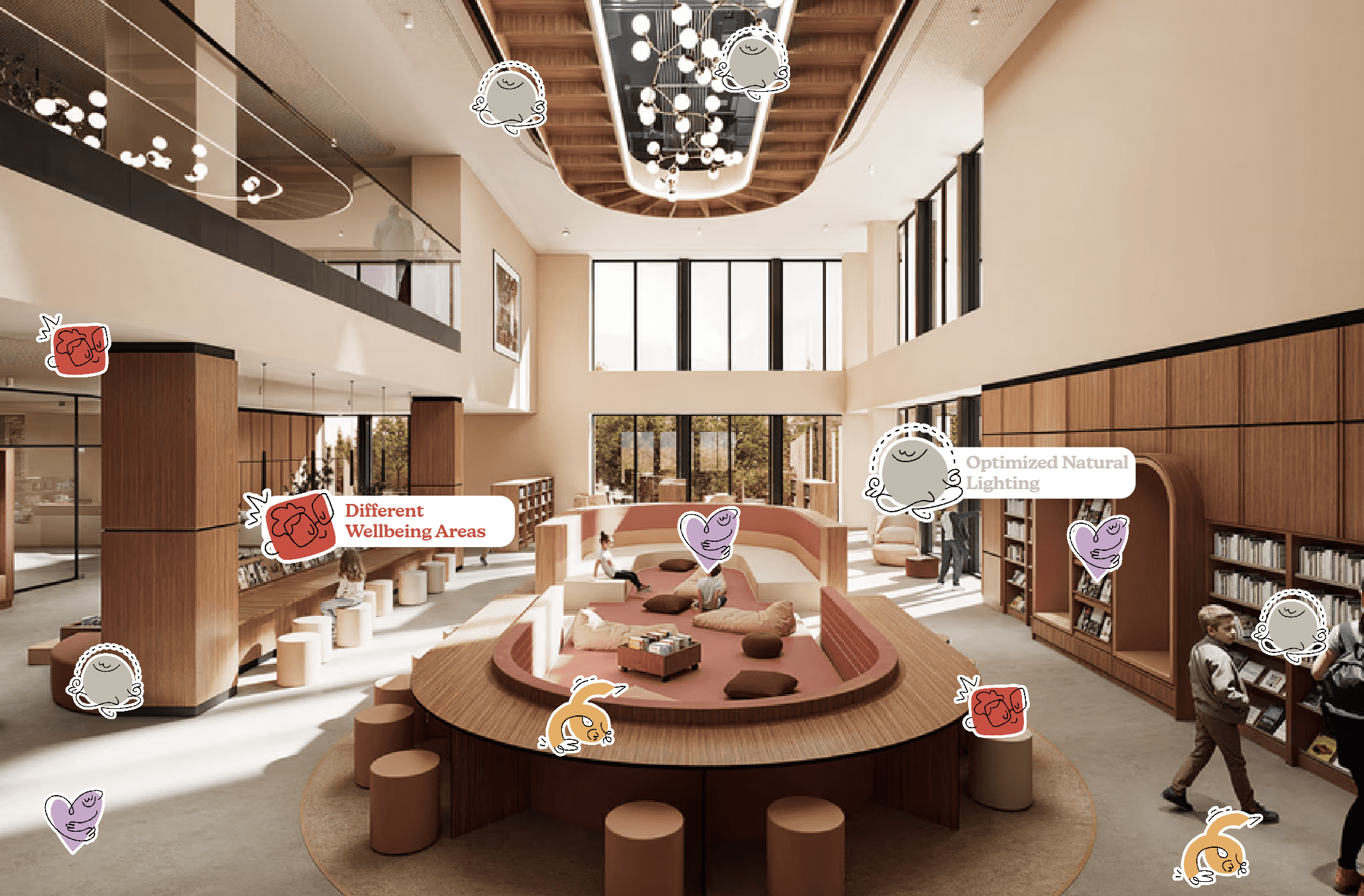
Neuroeducation brings together neuroscience, psychology and pedagogy to better understand how people learn. It shifts attention away from a one-size-fits-all approach to individual differences in development, attention, movement, emotion and cognition.
This perspective places the learner at the centre. It encourages educators and designers to consider not only what is being taught, but the conditions that can make learning easier to access, navigate and sustain.
For Beyond the Box, neuroeducation provides a useful lens for understanding the learning environment. It does not suggest that architecture can determine learning outcomes. Instead, it helps us ask how space can reduce barriers, support different ways of learning and contribute to a more effective educational experience.

Take the Movement Into Your School
Explore the Quality Factors
Learn the core components of Cognitive, Motor, Sensory, and Socio-Emotional qualities.
Explore
Take the Survey
Evaluate your environment in under 10 minutes and get a quick visual performance snapshot.
Start
Bring It to Your School
Partner with us for workshops, architectural consultations, and layout prototyping.
Contact us
Go Deeper Into Thinking
For teachers, the book connects classroom experience to the case for environments that support wellbeing, attention, and belonging.

From Insight to Implementation
We partner with Kidzink and Koda to connect strategy, architecture, interiors, furniture, and delivery-turning neuro-educational insights into real spaces.
Explore KIDZINK

Take the ideas into practice
Beyond the Box and the Enriched Environment model are brought to you by Kidzink and Koda.
© 2026 Beyond the Box. All rights reserved.